
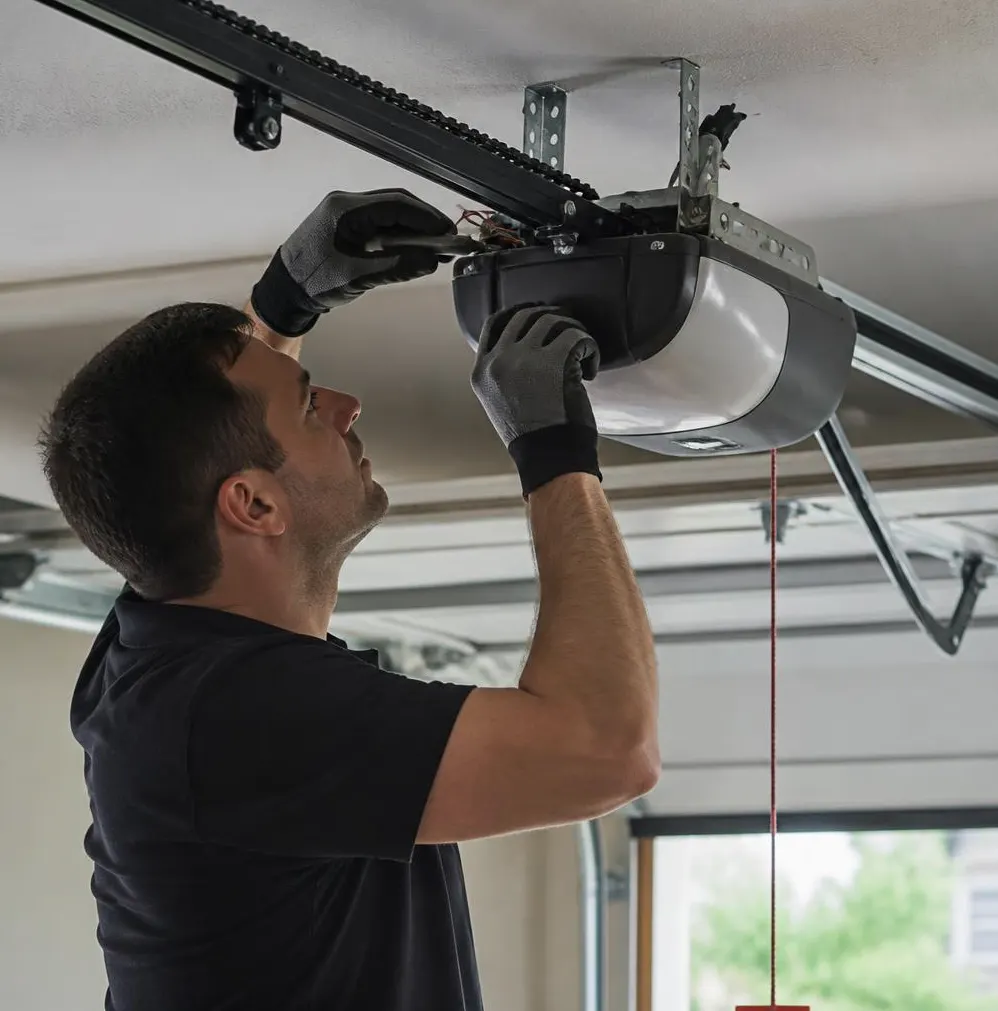
Rule of thumb: if your garage door feels stuck or sluggish on a cool morning in Jupiter, it's almost never actual ice. The exceptions are the handful of nights each winter when a strong cold front pushes overnight lows near freezing, especially a bit inland toward Hobe Sound or Stuart, where a thin layer of frost can form on the bottom seal and briefly tack it to the slab. For most Jupiter homeowners, though, a door that acts "frozen" is really reacting to humidity, salt air, or worn parts that cold-weather contraction happens to expose.
Symptoms Worth Paying Attention To
- The door won't budge when the opener runs, and you hear the motor straining or clicking.
- The door lifts a few inches, stalls, and the opener reverses on its own.
- One side rises faster than the other, so the door looks crooked as it opens.
- A grinding or squealing noise accompanies any movement at all.
- The bottom edge looks or feels gummed to the concrete before the first tug.
What a Technician Checks First, and In What Order
1. The Bottom Seal and Threshold
This is the first thing to rule out because it's the most common culprit in this climate. The rubber weatherstripping along the bottom of the door absorbs moisture during humid stretches and afternoon downpours, then swells slightly and presses against the concrete. On a cooler, drier morning it can feel genuinely stuck, almost like it's frozen down. The fix is simple: a technician breaks the seal gently, checks the rubber for cracking or permanent swelling, and replaces it if it's lost its shape. A new seal costs far less than letting the door strain against it repeatedly, which can bend the bottom panel over time.
2. Track Obstructions and Alignment
Next comes a visual check of both tracks for debris, dents, or gaps where the track has pulled away from the wall. Afternoon storms wash in sand, pollen, and grit that settle in the track channel and act like sandpaper on the rollers. If the track is simply dirty, cleaning and re-lubricating solves it. If it's bent or misaligned, that's a sign the door has been fighting resistance for a while and the track needs to be reset or replaced.
3. Rollers and Hinges
Coastal salt air is hard on exposed metal, and nylon or steel rollers plus their hinge pins are usually the next thing to show wear. Salt-laden moisture speeds up corrosion even on rollers that look fine on the surface. A technician will spin each roller by hand to feel for grinding or flat spots and check hinge pins for rust buildup that stiffens movement. Minor rust gets cleaned and lubricated; rollers that are pitted or hinges that are seized get swapped out, which is standard work under cable and roller replacement.
4. Spring Tension
Torsion and extension springs lose a small amount of lift capacity as metal contracts in cooler temperatures, and a spring that was already near the end of its life can tip over into clearly underperforming on a chilly morning. This shows up as the opener straining harder than usual or the door feeling heavier when lifted manually. Checking spring tension is not a homeowner task — these springs hold significant stored force — but a technician can test lift balance quickly and recommend adjustment or replacement if the spring has stretched or lost coils.
5. Lubrication
Old grease and oil thicken slightly as temperatures drop, which adds friction to every moving part at once. If everything above checks out fine, the likely answer is that the door simply hasn't been lubricated in a while and the existing product has gone gummy. The fix is a full relube of hinges, rollers, tracks, and the opener's drive mechanism with a lubricant rated for humid, salty air rather than a generic household oil.
6. Opener Settings and Limit Switches
If the door still hesitates or reverses after the mechanical parts are cleared, the opener's force and limit settings get checked last. Humidity swings can cause minor drift in how much resistance the opener expects to feel before it decides something is blocking the door, which produces stalling or reversing that looks mechanical but is actually a settings issue. Recalibrating this takes a technician a few minutes once everything else has been ruled out.
When to Call Jupiter Overhead Door Co
If your door is sticking at the bottom seal, stalling partway, or sounding rough on cool mornings, it's worth having it looked at before the next string of storms puts more strain on a door that's already working harder than it should. We handle garage door tune-up and maintenance visits that cover the full list above in one trip, and if rollers or cables are the actual cause, cable and roller replacement is straightforward, same-day work in most cases.
Call Jupiter Overhead Door Co for a garage door tune-up anywhere from Jupiter to Stuart, and get your door moving the way it should before cooler mornings and storm season both test it.