
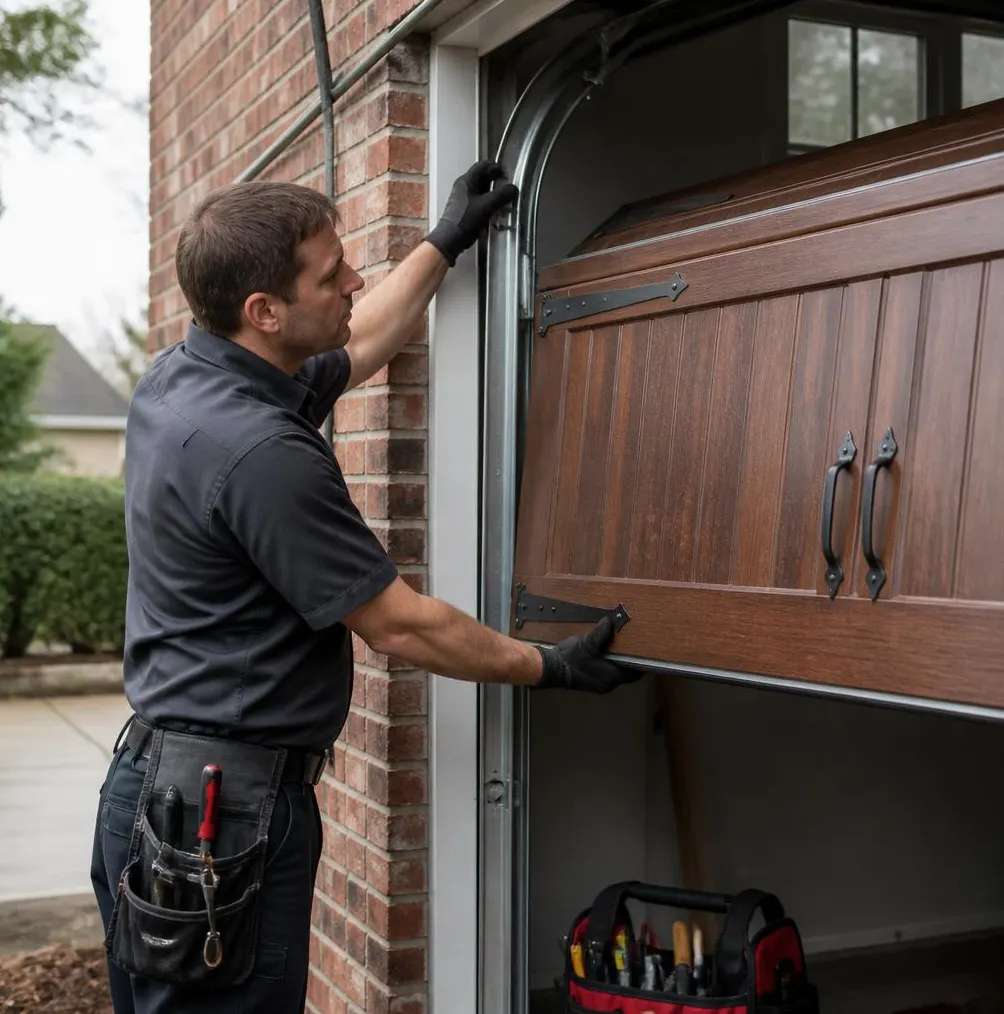
Grinding usually means metal parts are rubbing without lubrication or a roller has failed. Squealing points to dry hinges or rollers. Popping is almost always a track obstruction, a fraying cable, or a spring under stress. Rattling is loose hardware or worn rollers shaking in the track. Here's how a technician works through each one, in the order they'd actually check it.
Grinding: Metal-on-Metal Contact
Grinding is a low, harsh sound that usually gets louder as the door moves. It means something metal is scraping against something it shouldn't be.
- Rollers first. Nylon rollers crack and their bearings seize over time, especially with the heat and humidity swings common here. A seized roller drags along the track metal-on-metal instead of rolling smoothly. The fix is a roller swap, usually done a few at a time rather than waiting for all of them to fail.
- Track alignment next. If rollers look fine, the technician checks whether the track has bent or pulled away from the wall, forcing rollers to grind against the rail edge. This is a re-alignment job, sometimes paired with tightening loose track brackets.
- Opener drive gear last. On chain and belt-drive openers, the internal plastic gear that turns the sprocket wears down with age and heat exposure. A worn gear produces a grinding or clicking sound from the motor unit itself, not the door. This is a gear replacement inside the opener housing, not a track repair.
Squealing: Lack of Lubrication
Squealing is a higher-pitched, friction-based sound, and it's the noise most directly tied to local humidity. Moisture in the air washes out grease and lubricant faster than it would in a drier climate, so parts that should glide start to squeak.
- Hinges first. These are the easiest culprit and the easiest fix: a silicone-based garage door lubricant on the hinge pins usually quiets things down within a day.
- Rollers next. If hinges are lubricated and the squeal persists, the roller stems and bearings get checked. Salt air near the coast accelerates corrosion on metal roller stems, which makes them bind and squeal even with lubricant applied.
- Spring coils last. A squeal that seems to come from overhead, near the top of the door, can mean the torsion spring coils are rubbing against each other or the shaft. This isn't just a lubrication issue — it can be an early sign the spring is nearing the end of its life. A technician will inspect for stretching or gaps in the coil before recommending a fix.
Popping: Obstruction, Cable, or Spring Stress
Popping is a sudden, sharp sound rather than a continuous one, and it's often the noise that makes homeowners stop using the door until someone looks at it.
- Track obstructions first. A dent in the track, a stuck pebble, or a bracket that's worked loose can cause the roller to pop over the spot each time it passes. The fix is clearing the obstruction or replacing the dented section of track.
- Cables next. Lift cables that are fraying or slipping off the drum can produce a popping sound as they catch and release under tension. Frayed cables should be replaced before they snap, since a snapped cable lets one side of the door drop unevenly.
- Springs last. A pop right before the door becomes hard to lift, or a single loud bang, often means a torsion spring has broken. Afternoon humidity swings and the heat cycle here can also cause popping sounds as metal expands and contracts, though this is usually minor compared to a cable or spring issue. Spring replacement is not a DIY repair — the coils are under heavy tension.
Rattling: Loose Hardware or Worn Rollers
Rattling is a looser, shakier sound, often most noticeable during windy afternoons or storm-season gusts, since a door with a little play in its hardware will vibrate more under wind load.
- Fasteners first. Nuts and bolts at the track brackets and hinges work loose with repeated opening and closing. A full tightening pass is the first and often the only step needed.
- Rollers next. Worn rollers with play in the stem rattle inside the track even when hardware is tight. These get replaced rather than tightened.
- Chain or belt tension last. A loose chain or belt on the opener rail will slap against the rail during operation, producing a rhythmic rattle tied to the door's movement rather than the track. Tensioning the chain or belt per the opener's adjustment guide usually solves it.
- Weatherstripping and panels. On older wood or composite doors, panels that have swelled from moisture or warped slightly can rattle in high wind. This is also where doors built or retrofitted to local wind-load codes hold up better, since reinforced panels and track brackets flex less during storm-season gusts.
When to Call Jupiter Overhead Door Co
If lubricating hinges and tightening visible hardware doesn't quiet things down within a day or two, or if you hear a loud pop followed by the door feeling heavy to lift, stop operating it and call. A popped cable or a failing spring can let a door come down unevenly, which is a safety issue, not just a noise issue. We handle Garage Door Spring Repair for popping and sudden binding, and our Garage Door Tune-Up & Maintenance service covers the roller, hinge, and track inspection that catches grinding and squealing before it turns into a bigger repair — especially useful heading into hurricane season when you want the door's hardware tight and reliable.
If your garage door in Jupiter, Palm Beach Gardens, Tequesta, Juno Beach, North Palm Beach, Hobe Sound, Stuart, or West Palm Beach is making noise it didn't used to make, give Jupiter Overhead Door Co a call. We'll find out which of these it is and fix it the same visit.